
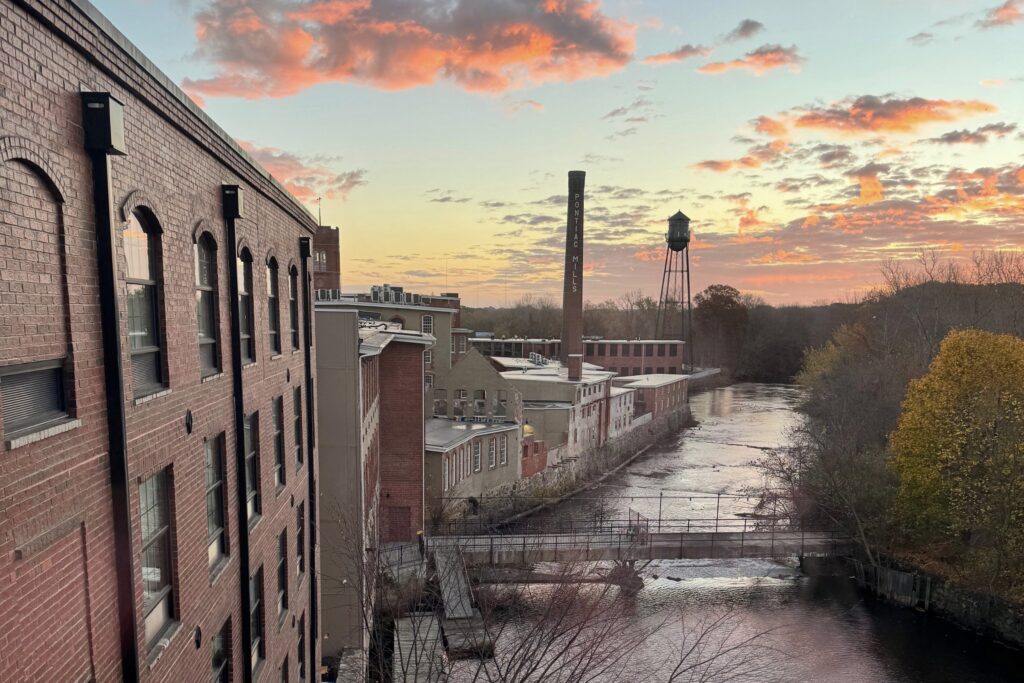
Some places seem to lower your shoulders the moment you step into them. You find yourself speaking more quietly without being asked, walking a little more slowly without realizing why. There is no sign instructing you to calm down, no rule requiring you to pause — and yet, you do. The space itself seems to make the request on your behalf.
We often talk about how places look, but far less about how they behave. And yet, every environment has a rhythm built into it, whether intentional or not. The width of a walkway, the height of a ceiling, the way light moves across a room as the day progresses — these details quietly shape how we move, how long we stay, and what kind of attention we bring with us.
Certain places ask us to slow down because they were designed — or allowed — to unfold rather than announce themselves.
They don’t demand immediate understanding. They don’t reveal everything at once. Instead, they invite presence through restraint. There is room to look without needing to act, to stand without needing to decide what comes next. In these spaces, the absence of urgency feels intentional, not accidental, and the body responds accordingly.
This is not about luxury or grandeur. Some of the most calming spaces are modest in scale. A shaded path that curves instead of cutting straight through. A bench positioned to face something open rather than something busy. A room where the light changes gently instead of abruptly. These environments don’t compete for attention. They hold it.
When a space is designed only for efficiency, it keeps us moving. When it is designed with care, it allows us to arrive.
We often underestimate how much our surroundings ask of us. Harsh lighting, tight layouts, constant noise — these things require vigilance, even when we’re not consciously aware of it. They keep the nervous system alert, scanning, preparing for the next demand. In contrast, spaces that feel calm are not empty or neutral; they are considerate. They reduce friction. They signal safety. They make rest possible without calling it rest.
This is why certain places linger in memory long after we’ve left them. Not because they were dramatic, but because they made us feel held. We remember how our pace changed there, how time seemed to stretch just slightly, how nothing required us to hurry.
Travel makes this especially visible. When we visit somewhere new, we often notice immediately which spaces invite us to linger and which ones push us through. The places we remember fondly are rarely the most crowded or overstimulating. They are the ones where we felt allowed to stay — to sit, to wander, to notice without purpose.
But this doesn’t only apply to travel. It applies to our homes, our neighborhoods, the places we return to every day. The environments we move through repeatedly shape us over time. They teach us, subtly, how to live inside them.
A home that is overly optimized for activity can leave little room for reflection. A room with no quiet corner asks us to stay alert even when we don’t need to be. In contrast, a space that includes softness — a place to sit without intention, light that shifts naturally, a moment of visual rest — creates the conditions for slowing down without instruction.
This is not about aesthetic perfection. It’s about permission.
Certain places ask us to slow down because they don’t ask anything else of us. They don’t require performance. They don’t demand consumption. They don’t insist on constant movement. They allow us to exist without producing something in return.
This way of thinking is central to Disney Dally’s approach to space. Not as decoration, and not as trend, but as emotional design. The belief that environments should support the pace of a human life, not override it. That the spaces we inhabit can either fragment our attention or gather it — often without our realizing which is happening.
When we begin to notice how space affects us, we gain agency. We start to choose environments — and shape our own — with greater care. We recognize when a place is asking too much of us, and when it is offering us something back. We understand that slowing down is not always a personal discipline; sometimes it is a response to being well-held.
The most meaningful spaces are not the ones that impress us immediately. They are the ones that make us feel slightly different without announcing why. The ones that change our pace, soften our edges, and allow us to stay longer than planned.
They don’t tell us to slow down. They make slowing down feel natural.
