
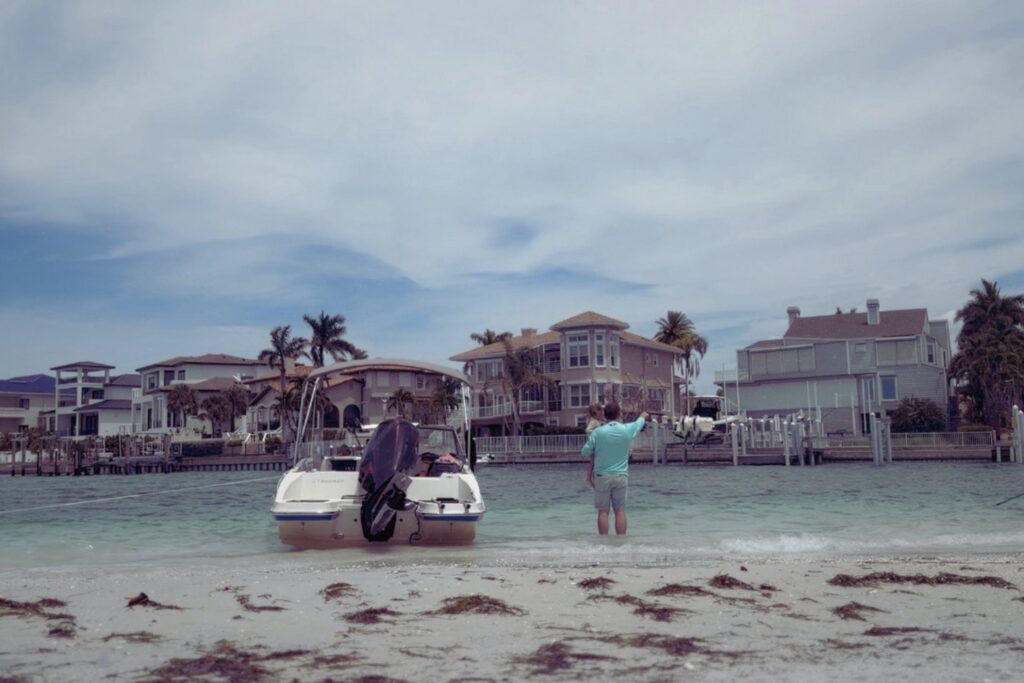
And it’s not because it wasn’t meaningful.
It’s possible to move through an entire day and, by the end of it, struggle to remember any real part of it. Not because nothing happened, and not because the day lacked meaning, but because you were never fully inside of it.
The day was likely full in all the ways it was supposed to be. You woke up, moved through what needed to be done, responded to what came in, kept things going, took care of what and who depended on you. From the outside, it would look like a complete day—productive, responsible, even successful in the ways that are typically measured.
And yet, when it’s over, there is very little you can point to that actually stayed with you.
This isn’t unusual. In fact, it’s how most days pass.
But every once in a while, something does remain. Not the moments you planned for or tried to create, and rarely the ones that would seem most important if you were asked to choose in advance. What stays is usually something smaller, quieter, and almost easy to overlook at the time—a brief pause in the middle of the day, the way your daughter leans into you without saying anything, the stillness in the house after everything settles, or a moment outside where something about the air feels different for no clear reason.
These moments aren’t documented or emphasized. You don’t reach for your phone, and you don’t consciously decide that they matter. In fact, they often pass without acknowledgment. And still, they are the ones that remain.
It’s easy to assume that memory is tied to importance—that the things we remember must have been the most meaningful, the most significant, or the most worthy of being held onto. But that isn’t how memory works. What stays is not determined by scale or intention. It’s determined by presence.
Most of what fills a day disappears not because it lacked value, but because it was experienced too quickly, too partially, or too distractedly to ever fully register. There is a quiet but important difference between being somewhere and being in it. You can be in the room, answering questions, moving from one task to another, already thinking about what comes next, and never actually arrive in the moment you’re physically standing in. When that happens, the moment passes through you without leaving any imprint.
The moments that remain are not louder or more significant than the rest. They are simply the ones where, for whatever reason, you slowed down enough to feel them—even if only briefly, and even if you didn’t realize it at the time.
Life rarely feels like it’s slipping away in any dramatic sense. It doesn’t announce its absence or demand to be noticed. Instead, it fades in a quieter way. Entire days, weeks, even seasons can pass not because they were empty, but because they were never fully experienced. Most of it doesn’t stay.
The shift, when it happens, is not about overhauling your life or reducing everything you carry. It is smaller and more subtle than that. It begins with noticing when you are moving through something instead of being in it, and allowing certain moments to last just a little longer than they otherwise would. It’s choosing not to immediately reach for something else the second a space opens, and instead letting yourself remain where you are for a few seconds more.
You don’t need a different life in order to remember more of it. You don’t need more time, or more meaningful circumstances, or a version of your days that looks different from the one you already have.
You simply need to be present within it—long enough for something to stay.
