
At some point in most Disney trips, the shift happens.
The pace picks up, the noise builds, and what started as something you were looking forward to begins to feel like something you need to keep up with. It’s not usually part of the plan. Most people prepare for the rides, the reservations, and how they’re going to get everything done.
They don’t plan for the moment when they need a break from all of it.
That’s usually the point where people try to push through. But if you’ve done enough Disney trips, you start to realize that the moments where you slow down—even briefly—are often the ones you remember most.
Not because they’re big. Because they feel different.
There’s a tendency to think of Disney in extremes. Either it’s crowded and high-energy, or you’re leaving the park entirely to escape it.
In reality, there’s a middle ground.
There are places—both inside the parks and just outside of them—where the pace softens enough to reset. You don’t lose the experience. You just step out of the intensity of it for a little while.
You just have to recognize where those places are.
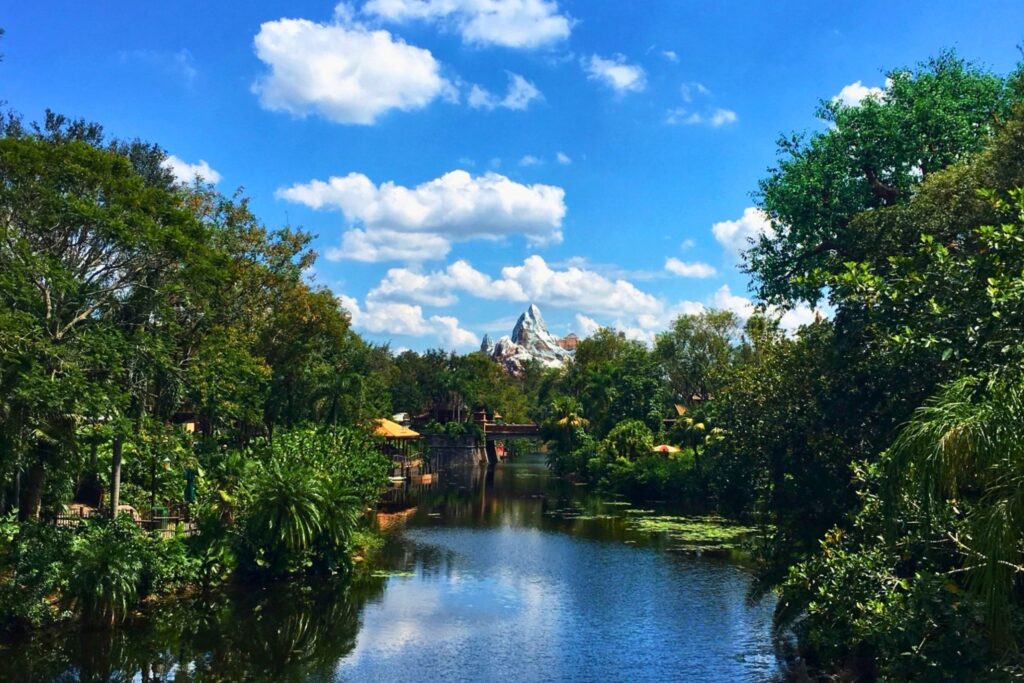
The paths around the Tree of Life in Animal Kingdom are one of the easiest places to feel the difference. Most people stop for a photo and move on, but the smaller walkways that circle the area are noticeably quieter. The crowds thin out, the movement slows, and you start to notice details that are easy to miss when you’re moving quickly from one thing to the next.
EPCOT works the same way if you know where to step off. The main loop carries most of the traffic, but behind the pavilions—especially in Japan, Morocco, and the United Kingdom—you’ll find shaded seating areas and small garden spaces that feel removed from the pace of the walkway. You don’t have to leave the park to find them. You just have to step slightly off the main path.
Some of the most overlooked places, though, aren’t designed to be destinations at all. They’re the spaces people are trying to move through as quickly as possible—walkways between lands, bridges, edges of the park where nothing obvious is happening.
If you stop there instead of rushing through, the experience shifts. The urgency drops, and for a few minutes, the day feels more manageable.
Sometimes, though, the best reset comes from stepping just outside the park entirely—without ending the day.
Taking a boat to a nearby resort is one of the simplest ways to do that. The movement alone slows things down, and when you arrive, the atmosphere is noticeably different. The noise drops, the pace changes, and you’re no longer in the middle of everything.
Resort lobbies—especially at DVC properties or the main buildings—almost always have quiet seating areas where you can sit for a bit without needing a plan. For families, this is often the difference between a day that feels overwhelming and one that feels manageable.
Sometimes it’s the break itself. Sometimes it’s just the boat ride.
Animal Kingdom at dusk is another moment where the shift happens naturally. The light changes, the crowds start to thin, and the energy of the park feels more grounded. It’s one of the few times during the day where Disney doesn’t feel like it’s pushing you forward.
None of these places are hidden. They don’t require special access or a detailed plan.
They’re just places most people move through too quickly to notice.
Enjoying Disney more doesn’t usually come from doing less. It comes from moving through the day differently. From recognizing when to pause instead of pushing forward, and allowing space between the things you planned.
Those are the moments that tend to stay with you.
If you’ve ever felt like Disney moves too fast to fully enjoy it, there is another way through it.
A Quiet Way Through Disney is built around that idea—a more intentional way to experience the parks without losing what makes them meaningful.
If you prefer something quieter to start, The First Edition Letters explore this way of thinking in a more personal, ongoing format.
