
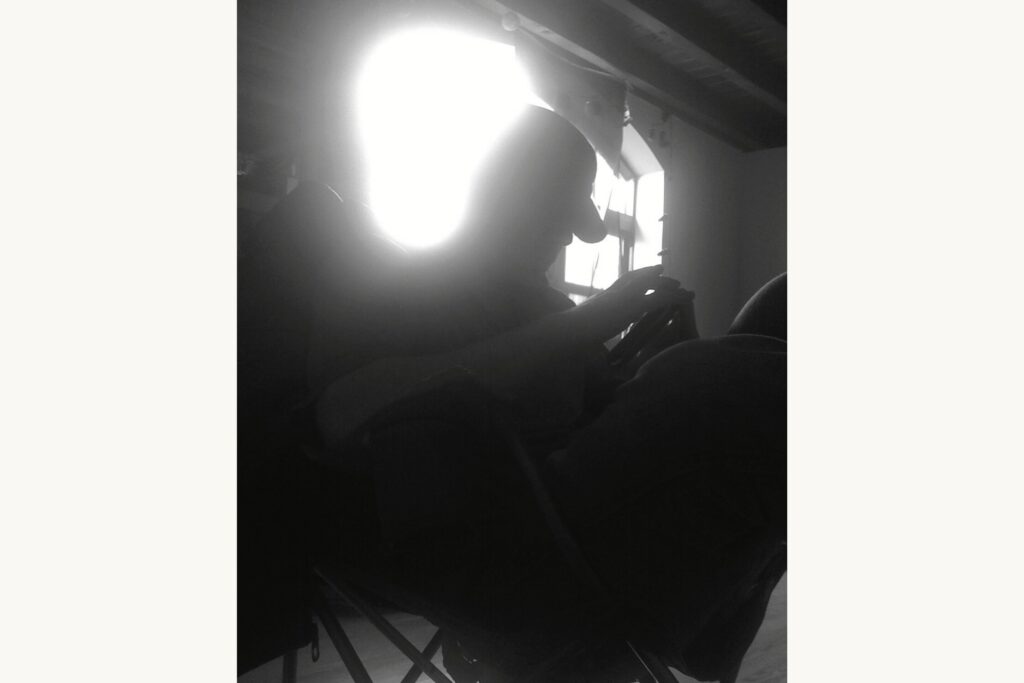
I want to consider how often we say we’re tired, and how rarely we stop to ask what kind of tired we actually mean. Because there’s the tired that comes from doing something that mattered — the kind where your body feels spent, but your mind feels quiet and almost grateful. And then there’s the other kind, the tired that comes from days packed too tightly, from moving quickly without ever really arriving anywhere, from being productive without feeling particularly alive. We tend to talk about them as if they’re the same, but they couldn’t be more dissimilar. Some days are busy. Others are full. And the difference between them has very little to do with how much you got done.
Busy days are loud. They announce themselves with lists and notifications and a sense of urgency that feels unforgiving. At the end of them, you can usually account for every hour, every task, every interaction — and yet, when you try to remember how the day actually felt, there’s often very little there to hold onto. Full days are quieter. They don’t always look impressive from the outside, and they rarely arrive with fanfare. You begin the day without urgency, waking to soft light and a house that hasn’t fully stirred yet. Coffee becomes a small ritual rather than fuel, something you drink slowly while looking out a familiar window and noticing what’s there. You get ready and step outside not to accomplish anything, but simply to move and let the day meet you. Meals aren’t rushed, conversations unfold naturally, and the afternoon leaves room for thoughts to wander without being immediately put to use. As the light changes, the day begins to soften, and you let yourself slow with it, ending the evening not exhausted but settled, carrying one or two quiet moments with you — not because they were remarkable, but because you were fully there when they happened.
We live in a culture that rewards busyness and mistrusts fullness. We measure worth by output, by efficiency, by how much we can fit into a finite amount of time. We praise packed schedules and glorify exhaustion, as if being constantly depleted is evidence of a life well lived. But when you look honestly at the days you remember most — the ones that return to you without effort — they’re rarely the busiest ones. They’re the days when something landed. Maybe it was a long walk with no particular destination or sitting somewhere familiar and suddenly noticing the way the light changed in the late afternoon. Maybe it was a meal that took longer than planned because the conversation kept deepening, unfolding in directions you couldn’t have scheduled if you tried, or an evening with friends where laughter lingered long after you’d forgotten the time. Those days don’t feel full because they were efficient. They feel full because they were inhabited.
Being busy pulls us outward. It fragments attention and asks us to be many places at once, even when our bodies are only in one. Being full draws us inward, not in a self-absorbed way, but in a grounding one. It allows us to stay with an experience long enough for it to leave a mark. What’s tricky is that fullness often requires restraint. It asks us to do less than we could, to leave space where something else might fit, and that can feel uncomfortable at first — especially if we’ve learned to equate motion with meaning. But fullness isn’t accidental. It’s designed. It shows up not only in how we plan our days, but in how we respond when plans loosen, in whether we allow a moment to stretch instead of snapping it back into place, in whether we give ourselves permission to linger — not because we earned it, but because lingering is sometimes the point.
This is where Disney Dally lives, not as a brand or an aesthetic, but as a way of paying attention. It’s the choice to notice that a day doesn’t need to be maximized to be meaningful, that a trip doesn’t need to be optimized to be memorable, that a life doesn’t need to be constantly filled in order to feel full.
When you think about it, the moments that stay with us usually aren’t the ones we planned down to the minute. They’re the ones that surprised us slightly, that unfolded at their own pace, that felt complete without needing to be shared or justified. Fullness isn’t loud. It doesn’t rush in. It settles. And maybe that’s why we miss it sometimes — because we’re trained to keep moving just as it’s trying to take root. Learning the difference between being busy and being full isn’t about rejecting modern life or opting out of responsibility. It’s about recognizing that not every hour needs to be productive, and not every day needs to be impressive. Some days just need to be felt.
It’s about asking a different question at the end of the day. Not What did I get done? but What stayed with me? Because the answer to that question will tell you far more about the shape of your life than any list ever could. And once you start noticing the difference — once you really feel it — it becomes harder to settle for days that leave you empty, no matter how busy they were. That awareness doesn’t demand a dramatic change or a reinvention of your life. It simply invites a softer kind of intention, a willingness to leave space, a trust that fullness knows how to find you if you stop crowding it out. Sometimes the most meaningful thing you can do with your time is not to fill it at all, but to let it hold something worth keeping.
